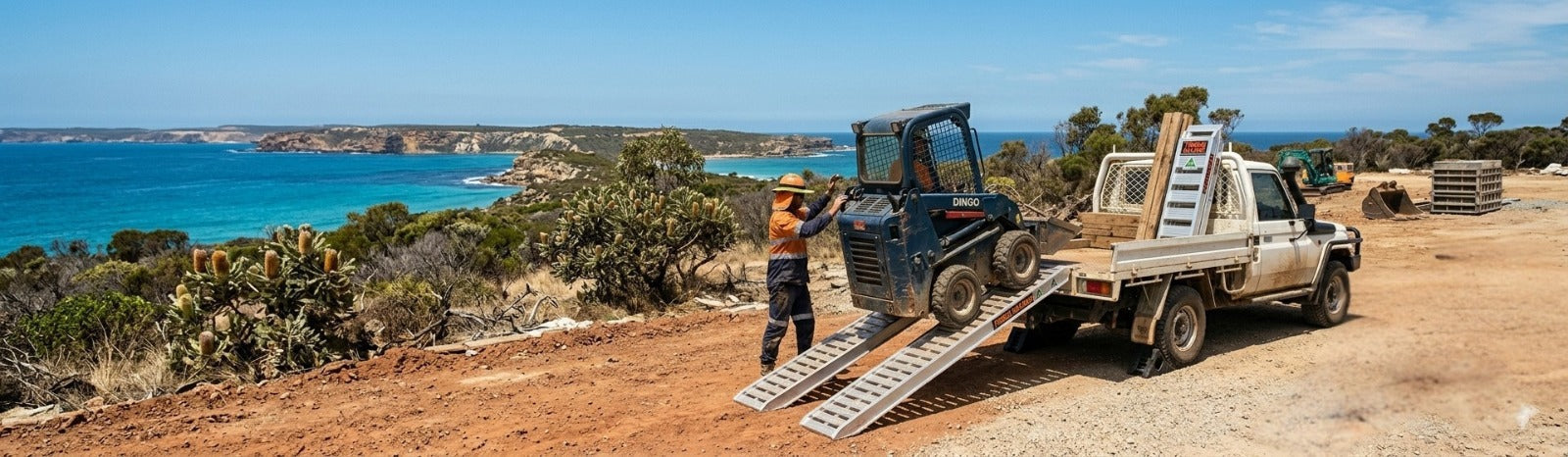
Whether you're loading an excavator onto a trailer, moving a ride-on mower into a shed, or rolling pallets into a container, choosing the wrong loading ramp can be dangerous and costly. Here's what to look for before you buy.
1. Know your load capacity
The most important factor is the weight of whatever you're loading. Always choose a ramp rated above your maximum load — not right at it. As a guide:
- ATVs, ride-on mowers, small machinery: 1–2 tonne ramps
- Cars, utes, small trucks: 3–4 tonne ramps
- Excavators, skid steers, heavy machinery: 7.5–9 tonne ramps
Tools Galore stocks aluminium loading ramps from 1 tonne all the way up to 9 tonne, so there's an option for every application.
2. Length matters — and longer is usually safer
A longer ramp means a shallower angle, which makes loading safer and easier — especially for heavy or low-clearance equipment. As a rule of thumb, the ramp length should be at least 3–4 times the height of the trailer or truck bed you're loading onto.
3. Serrated bar vs flat bar
- Serrated bar: Better grip, ideal for machinery with rubber tracks or tyres. Recommended for most outdoor and heavy-duty use.
- Flat bar: Smoother surface, better suited for wheeled equipment like trolleys, pallet jacks, or vehicles being pushed by hand.
4. Folding vs fixed
Folding ramps are easier to store and transport, making them ideal for removalists, hire companies, and anyone who moves ramps between sites. Fixed ramps offer slightly higher rigidity for very heavy loads.
5. Don't forget the attachment
Check how the ramp attaches to your trailer or truck. Hook-style attachments are the most common and secure. Container ramps use a different lip design — make sure you're buying the right type for your application.
Browse Tools Galore's full range of aluminium loading ramps — including excavator ramps, removalist ramps, ATV ramps, and container ramps, all available with fast delivery Australia-wide.
