Solar Panel Lifters: The Must-Have Tool for Every Australian Solar Installer
Work faster, safer, and smarter on every rooftop install — and capitalise on Australia's solar boom before demand outpaces supply.
Australia is in the middle of a solar revolution. With over 4.6 million rooftop solar systems already installed and the government pushing hard toward renewable energy targets, the demand for professional solar installers has never been higher — and neither has the pressure to complete jobs quickly, safely, and profitably.
Yet too many installers are still lifting heavy solar panels by hand. That's not just exhausting — it's dangerous, slow, and frankly unnecessary in 2025. Enter the solar panel lifter: the tool that experienced commercial installers have relied on for years, and that every serious residential installer needs on their van today.
What Is a Solar Panel Lifter?
A solar panel lifter (also called a panel vacuum lifter or photovoltaic panel handling tool) is a mechanical or vacuum-assisted device that securely grips a solar panel and allows one or two workers to safely lift, position, and mount it on a roof — without straining their back or risking a drop.
Most modern solar panel lifters use a multi-cup vacuum suction system that attaches directly to the panel glass, providing a secure grip rated for panels up to 30+ kg. An integrated pump or hand-operated vacuum maintains suction throughout the entire lift and placement process.

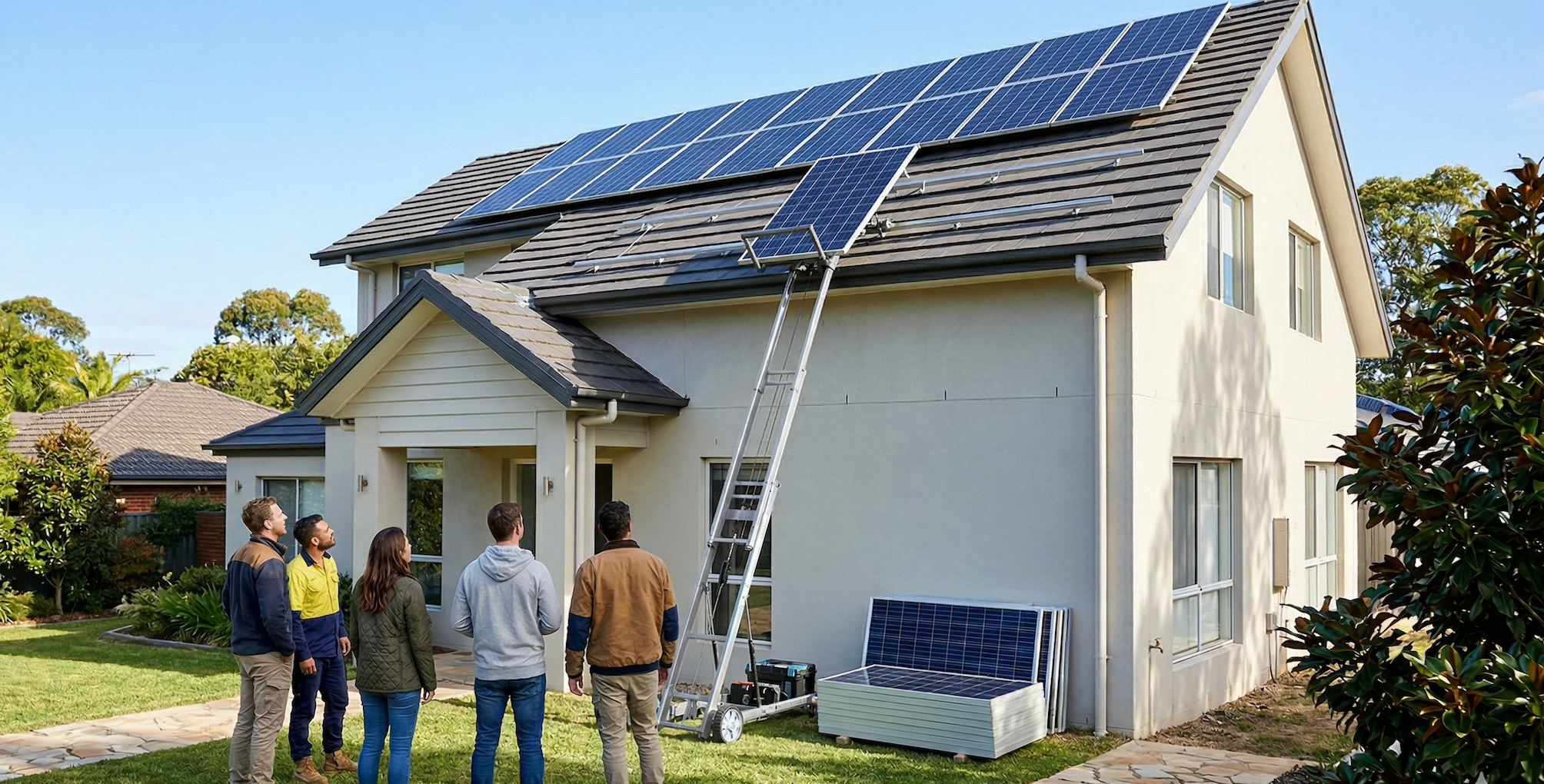
A solar panel lifter makes single-person panel handling safe and efficient on any rooftop.
Why Every Installer Needs One
Manual panel handling carries serious risks — to your body, to the panel, and to your business. Here's why making the switch to a solar panel lifter pays for itself on the very first job:
Worker Safety First
Eliminates awkward overhead lifts and twisted postures on pitched roofs — the #1 cause of installer injuries.
Up to 60% Faster
One installer can position and fix panels in the time it used to take two. More panels per day = more revenue per job.
Protect Your Investment
A dropped panel costs $300–$800 to replace. One averted accident covers the cost of the lifter entirely.
Smaller Crew Needed
Reduce your crew size without reducing output. Lower labour costs on every job while maintaining quality.
Precise Positioning
Vacuum grip means panels are held perfectly steady during alignment — no slipping, no re-doing work.
Client Confidence
Professional equipment signals a professional operation. Clients trust you more when they see you using the right tools.
How to Use a Solar Panel Lifter
Using a solar panel lifter is straightforward, even for first-timers. Here's the typical process on a residential rooftop install:
Inspect the Panel Surface
Check the glass is clean and free of dust or moisture where the suction cups will attach. Debris reduces suction strength — a quick wipe takes 10 seconds and ensures a safe hold.
Attach the Suction Cups
Position the lifter's suction cups evenly across the panel face. For a standard 60-cell panel, a 4-cup or 6-cup arrangement provides optimal load distribution. Pump to rated vacuum pressure.
Check the Vacuum Gauge
Always verify the pressure gauge reads green before lifting. Most lifters include an audible alarm if suction drops below the safe threshold during a lift.
Lift, Carry & Position
Use the ergonomic handle grips to carry the panel to the mounting location. The lifter keeps the panel rigid and balanced, so positioning into the rail brackets is smooth and controlled.
Fix & Release
Once the panel is clamped onto the rail, release the vacuum by pressing the relief valve. The suction cups release cleanly without marking or scratching the glass.
— Solar installer, Western Sydney
Why Solar — and Solar Lifters — Are About to Explode in Demand
If you're an installer or a business supplying the trades, now is the time to get ahead of the curve. Here's why solar panel lifters are not just useful today — they're going to be essential within the next 3–5 years:
have rooftop solar
target by 2030
in Australia by 2026
in 10 years
Panels Are Getting Bigger — and Heavier
The industry shift to high-capacity 600W+ panels means panels are getting physically larger and heavier. What was once manageable by hand is quickly becoming impractical — and unsafe — without mechanical assistance. The lifters being bought today are already necessary; those bought in 2026 will be non-negotiable.
Labour Shortages Drive the Need for Efficiency
Australia's solar industry is facing a significant skilled labour shortage. With more work than workers, the installers who can complete more jobs per day — safely — are the ones who win contracts. A solar panel lifter is the single most impactful investment a small installation business can make to increase capacity without hiring.
WHS Compliance Is Tightening
Safe Work Australia's guidance on manual handling and working at heights is becoming more strictly enforced on residential and commercial sites alike. Documented use of mechanical lifting aids protects you from liability and satisfies site safety requirements — reducing your insurance risk at the same time.
Battery Storage Is Driving Larger Installs
As home battery storage (Powerwall, Alpha ESS, etc.) becomes mainstream, the average residential install is growing from 6 kW to 10–13 kW systems. That's 30–40 panels per house. No one should be lifting 35 panels by hand in a single day.
What to Look for When Buying a Solar Panel Lifter
- Vacuum capacity: Look for a rated load of at least 30 kg to handle oversized commercial panels.
- Number of suction cups: 4–6 cups for even load distribution across large panel formats.
- Pressure alarm: An audible or visual alarm is a safety non-negotiable — not an optional extra.
- Ergonomic handles: Padded, rotating grips reduce wrist and shoulder fatigue during all-day use.
- Frame material: Aircraft-grade aluminium keeps the tool light enough to use on a ladder without fatigue.
- Australian compliance: Verify the tool meets AS/NZS standards for manual handling equipment.
Ready to Work Smarter on Every Install?
Tools Galore stocks professional-grade solar panel lifters, shipped Australia-wide from our Sydney warehouse. Built for Aussie conditions, backed by our quality guarantee.
Shop Solar Panel Lifters →